Known as the carer’s disease, Ebola infects those in close contact with sick people. Unlike the more common Zaire strain, no vaccine exists for the Bundibugyo Ebola strain that has killed more than 130 people in the Democratic Republic of Congo (DRC). The best chance for those infected is to seek early treatment.
In 2014-16, WHO’s Health Emergencies Team saw firsthand how the world’s biggest Ebola outbreak in West Africa was held back by delays in detection, suspicion among community members, weak infection controls and fragmented coordination. Today’s challenges are also steep: inadequate medicine, health worker shortages, and poorly-equipped laboratories to detect cases.
The difference is that the WHO Health Emergencies Program was able to act as soon as the outbreak was declared.
The speed of the emergency mobilization, the ability of the health services to respond and the capacity to assess risks ahead of time are the key elements of a life-saving humanitarian response.
Flexible Funding
Thanks to the Contingency Fund for Emergencies (CFE), a flexible funding mechanism, WHO could deploy supplies and response teams without waiting for donor governments to mobilize. The Fund enables WHO to release funding within 24–72 hours of the onset of a crisis, before formal appeals are launched and external financing is mobilized. With an outbreak of this severity, every day counts.
A Clear Path to Delivery
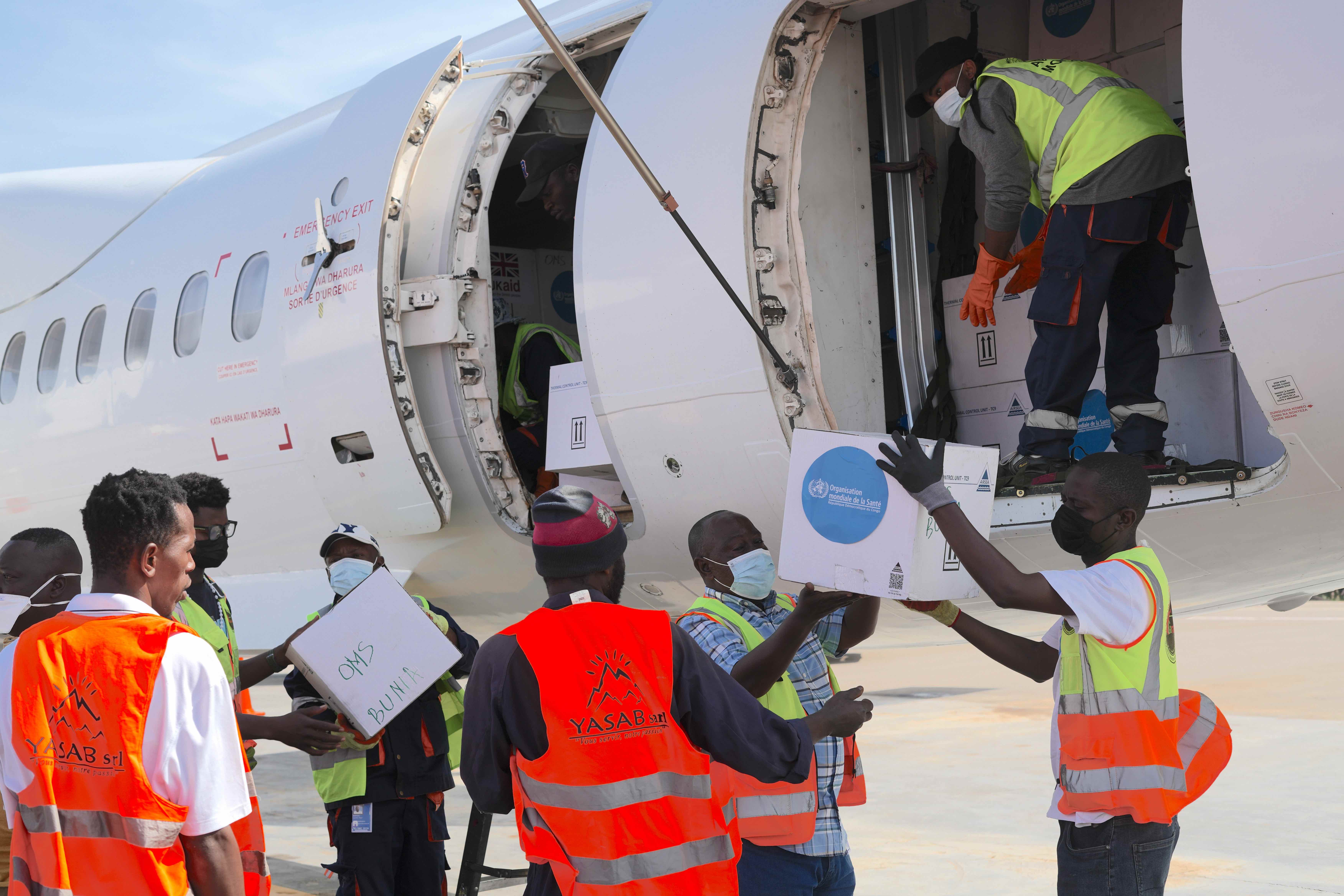
The speed of response for Emergencies is dependent on infrastructure. Through its regional Emergency Hubs, WHO could dispatch equipment and medical supplies within 48 hours of confirmation of the outbreak.
Epidemic Intelligence
By using its AI-enabled data surveillance, WHO was able to warn Uganda of disease spillover, enabling the government and health authorities to identify cases, track and trace contacts and take preventive action.
Ebola has amplified how these three elements can come together to save lives.
Unlocking the Response
Within a day of the WHO Director General announcing the Ebola outbreak a public health emergency of international concern, WHO released US $ 3.9 million from the CFE. It is a fraction of the likely cost of the response, which is predicted to need more than $US 500 million. But it was fast. And fast, in this situation, is not a luxury. It’s the baseline.
In 2025, WHO drew on the CFE to respond to 24 humanitarian health emergencies. This included 13 outbreaks of life-threatening diseases; among them cholera, Marburg Virus and an outbreak of the Zaire strain of Ebola, also in the DRC.
It did all this, despite contributions in 2025 falling to their lowest level since the fund was established
Activating the Infrastructure
Containing this outbreak depends entirely on operational speed. This means quickly identifying cases, stopping transmission in healthcare facilities, tracing contacts, and maintaining open laboratory access. There is no medical shortcut available.
The speed of mobilization, in turn, relies on the strength of preparedness. WHO’s Emergency Hubs in Nairobi, Kenya and Dakar, Senegal serve exactly this purpose. They provide a coordinated, well-resourced infrastructure of people and systems able to supply equipment, dispatch experts, track and trace contacts, treat patients, and coordinate community engagement.
The hubs were ready with pre-positioned supplies when this Ebola emergency was declared. The first equipment reached sites in the DRC within 72 hours. Readiness in WHO’s Dakar and Nairobi emergency hubs enabled the rapid dispatch of over 17 tonnes of emergency supplies: PPE, viral haemorrhagic fever supplies, tents, body bags, IPC materials, stretchers, medicines. In addition:
- Response teams were sent to Bunia, Mongbwalu, and Rwampara health zones.
- More than 150 health workers were trained on infection protection and control measures (IPC) and Ebola-specific measures; a cascade plan will train an additional 500 health workers.
- Laboratory teams were sent to Bunia, the site of the Ebola outbreak and WHO mobilized plans for field laboratories to be established
- Community mobilization was initiated in Mongbwalu, the suspected origin of the outbreak and social listening platforms were deployed via UNICEF partnership.
Accurate Forecasting Buys Time
The most consequential period in this, and any outbreak, is before the response begins. Before a single pathogen from an individual patient is confirmed, there are signals that public health experts are trained to investigate: a rise in hospital admissions, overcrowded health centers, media reports of unknown illnesses or unexplained absences in the workforce.
WHO has developed the Preparedness Data Exchange (PDX) to expand this detection capability. PDX is an AI-enabled intelligence platform that shifts the system from reactive detection of infectious disease outbreaks to proactive anticipation by assessing risks, monitoring health service readiness, as well as analyzing climate and environmental data.
On the day the Ebola outbreak was declared, the PDX platform accurately predicted the chances of spillover into Uganda, giving health authorities the chance to get ahead of the outbreak in the country.
The Ebola outbreak reminds us that WHO is uniquely positioned to have the infrastructure, financing mechanism and technology to respond to health emergencies efficiently. However, financing for ongoing emergencies is a growing challenge.
Please connect with our team to learn how you can help save lives by supporting these systems before the next emergency.