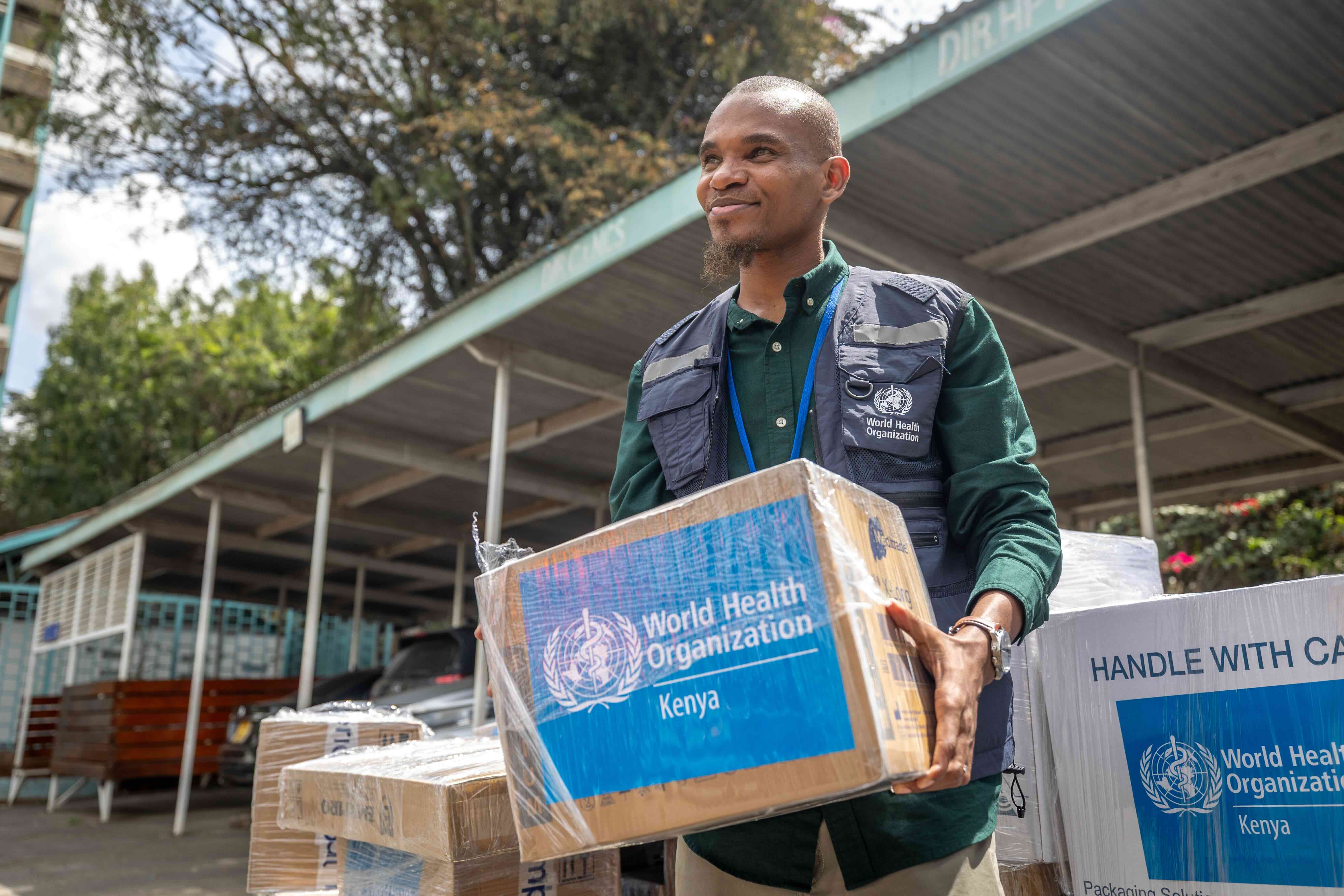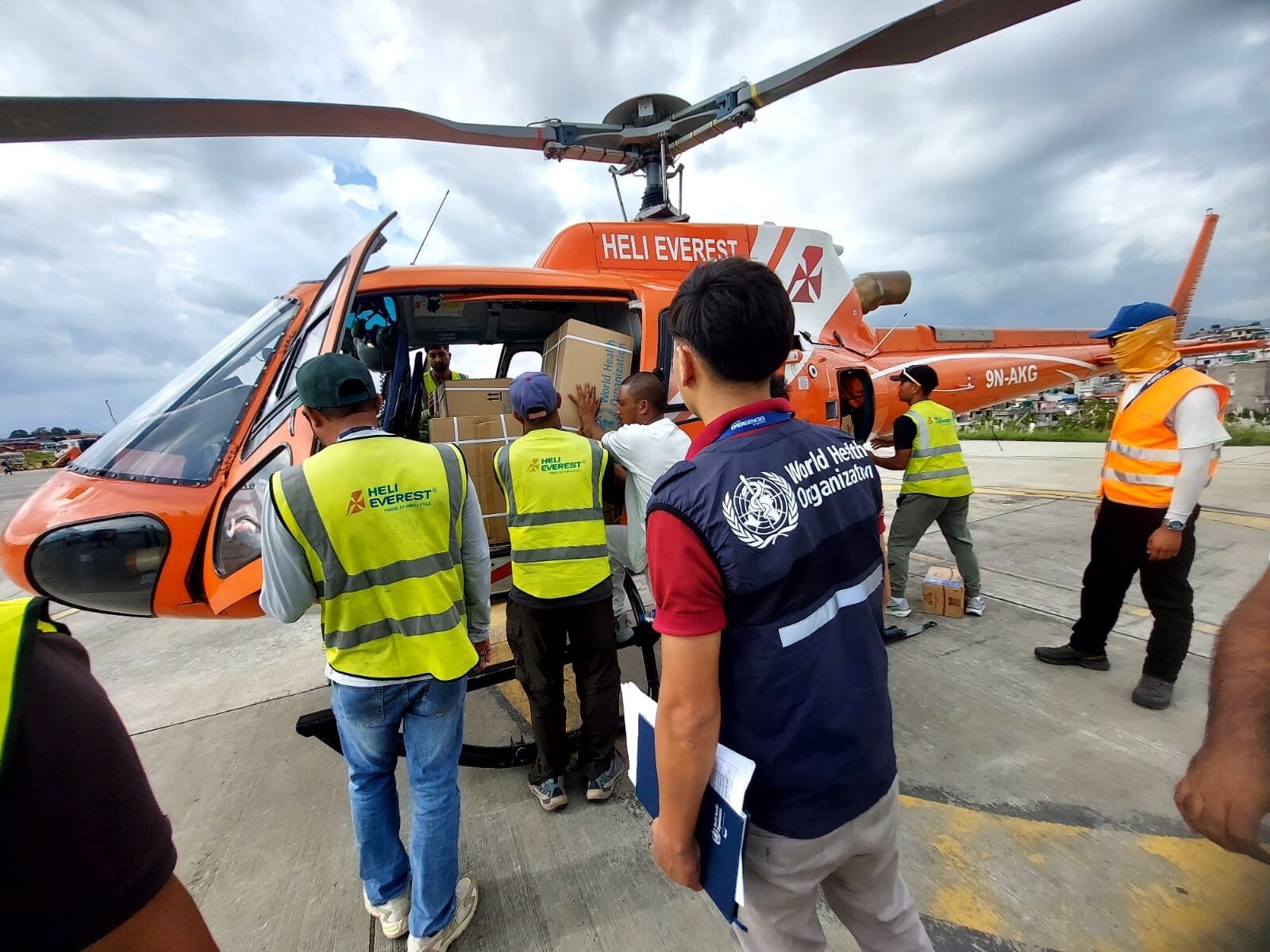

How does WHO’s Health Emergencies Programme react in the hours after a disaster? We look at how events unfolded in Nepal in the hours after catastrophic floods killed thousands of people in August this year. And how the right preparations meant the team were ready to respond and save lives.
The WHO Health Emergencies Programme was established more than 10 years ago to speed up the response to emergencies through planning and preparation. Put simply: Being ready saves lives.
The WHO Foundation, the official fundraising partner of the World Health Organization, raises funds to keep that readiness in place. Donate today and help us be ready for the next emergency.
The first hours after the Nepal floods
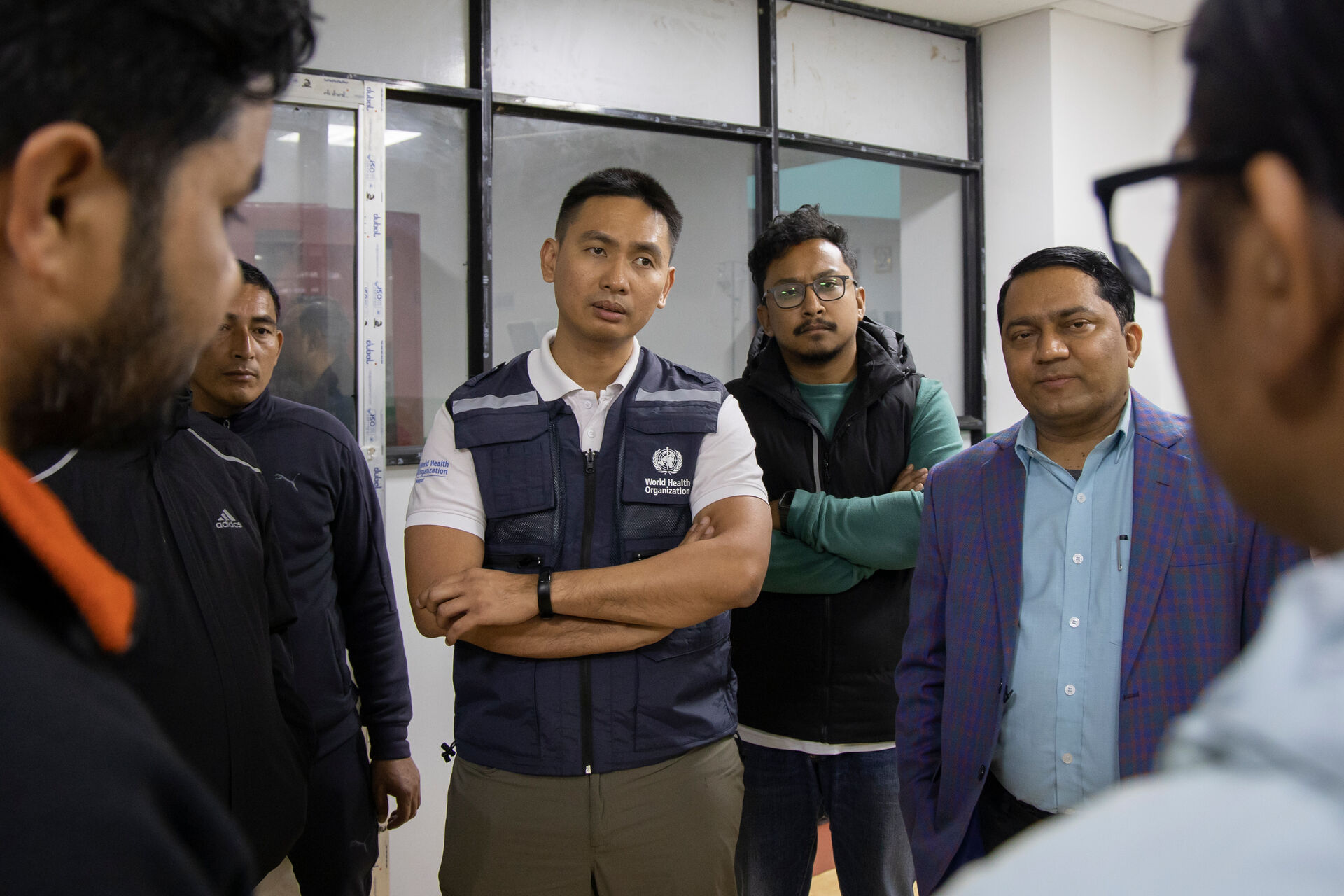
When a crisis unfolds, the situation is chaotic. News is often piecemeal and contradictory as the full picture emerges. While the world waits to learn more, emergency health responders, authorities and local people are already coping with the immediate aftermath and ongoing danger.
For Dr Allison Gocotano, Acting WHO Representative to Nepal, the first details of the impact of the August 26 floods came via a WhatsApp message. It confirmed that three health facilities in the region bordering Tibet, had been “fully damaged”, and were temporarily beyond use:
● Syafrubesi Health Post, Rasuwa
● Timure Health Post, Rasuwa
● Timmure Health Desk, Rasuwagadhi
August 26, 2026: 8.37am: The worst flooding in living memory swept through this border region, an entry point to the famous Langtang trekking route.
A glacial landslide in the Himalayas had sent rocks, ice and debris into Gyirong Valley and flood waters surging up to 100 metres above the usual level of the Trishuli River. We know now that thousands of people died or are missing, presumed dead. Thousands more were injured. and lost their homes, relatives and friends.
News was only just breaking in the hour following the flood, but the health sector’s emergency response framework was already in motion. “Whenever we find ourselves in such situations, including in the August 2026 floods, we are actually guided by the emergency response framework,” says Dr Gocotano, who is also WHO’s Health Emergencies team lead in Nepal. “It is not an academic exercise for us. It is a real life event. And we do this quite often, unfortunately.”
“It is not an academic exercise for us. It is a real life event.”
Hour by hour: WHO’s emergency response timeline
These messages summarizing the activity in the immediate hours after the floods were sent to the emergency response team via WhatsApp at the very beginning of days and weeks of an intense emergency response.
9.34 am: WHO staff coordinate with the Provincial Health Emergency Operation Centre in Bagmati to monitor the situation and prepare the response.
10.10 am: The team alerts two major hospitals, in Trishuli and the Kathmandu Valley, to get them ready for an influx of patients.
10.13 am: Emergency ambulances are on standby.
11.22 am: The Ministry of Health deploys an Emergency Medical Team.
11.27 am: WHO coordinates with the country’s Epidemiology and Disease Control Division.
As reports of injuries and the scale of loss unfolded, the emergency health response coordinated a surge delivery of essential medical supplies, tents for displaced people and the dispatch of emergency medical staff. Designated hospitals, in which staff had been trained for mass-casualty events, prepared to admit vast numbers of patients.
Within 12 hours, emergency medical supplies reached the disaster zone, sent from WHO’s warehouse and delivered via military helicopter. The interagency emergency health kit contained supplies for 10,000 people for three months.
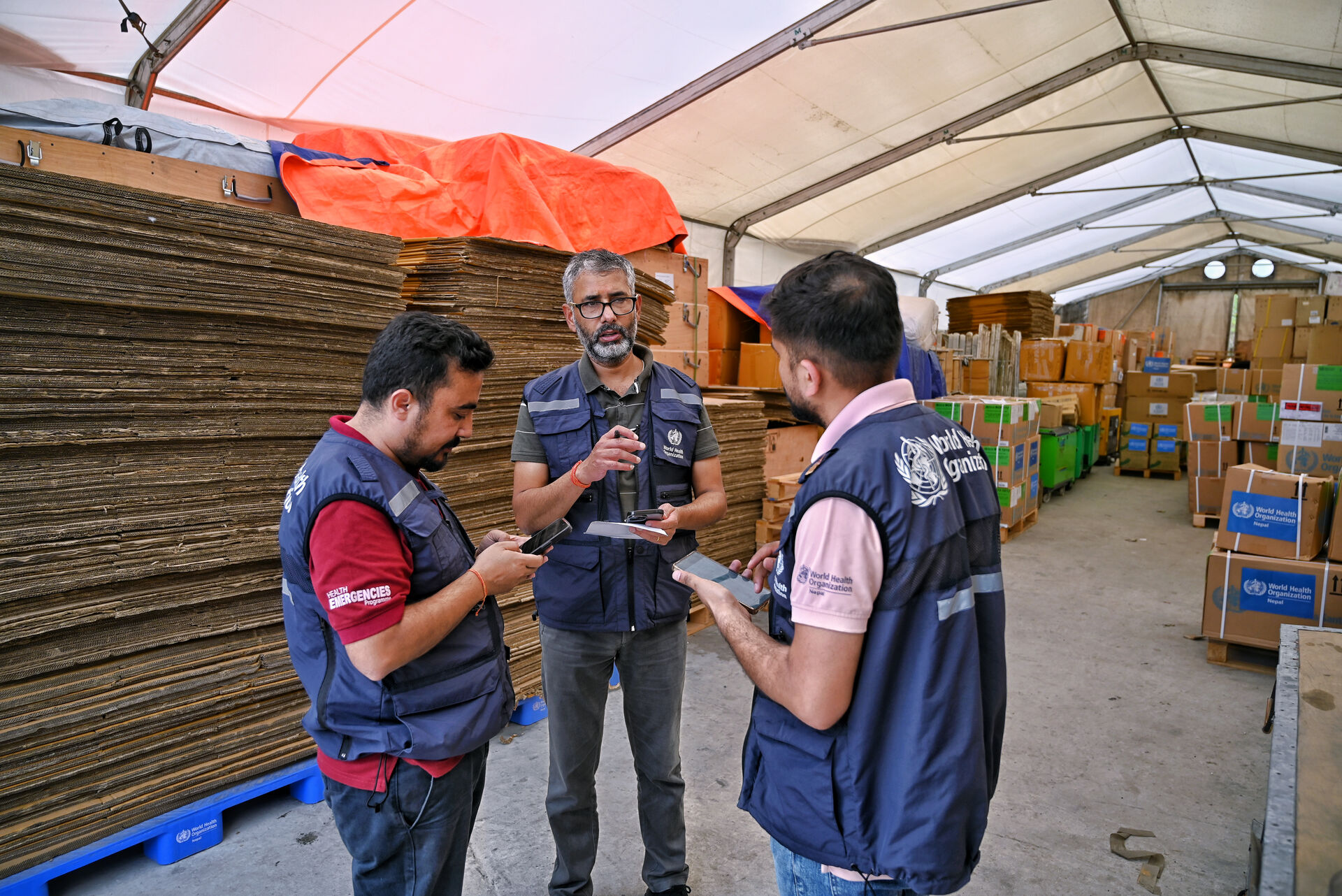
“Our warehouse is located near Kathmandu airport,” explains Dr Gocotano. “Because of our pre-positioned essential medicines, we were able to dispatch this inter-agency emergency health kit within 12 hours of the floods. It's really a critical component in terms of that response.”
That speed was only possible because the stock was bought, stored and positioned before anyoneknew it would be needed. Gifts to the Rapid Response Fund help WHO start responding to a crisis within hours.
Give to the Rapid Response Fund
Careful planning for crisis: why Nepal was ready
The drill for the first hours of a health emergency in Nepal was well rehearsed. In 2014, at the government’s request, WHO’s Health Emergencies Programme helped Nepal set up the first health emergency operation centre and a “hub-and-spoke” hospital network of regional health facilities that can refer acute patients to larger, better-equipped hospitals. Lessons learned from the 2015 earthquake - in which more than 8,000 people were killed - led to a decision to pre-position healthcare supplies, so WHO established emergency medical logistics warehouses in Kathmandu and in priority hub hospitals across the country.
WHO can mobilize quickly because, as the recognised international health authority, it has colleagues based in government health offices, working side-by-side on a variety of priority health programs, be it normal or emergency times. They are among the first to hear of a crisis as news travels from district offices to provincial centres and on to the national response centre.
“When the August 2026 floods happened, we had a combination of all of those elements that we have been building for preparedness and readiness since 2015, so more than a decade,” says Dr Gocotano, “It's not only about the actual items that were delivered, but [also] psychological first aid,” he added.
“Just having someone coming in with some relief, whether that is related to health or WASH [water and sanitation], it already is a signal that you are not alone and that someone is looking after you.”
Nepal flood recovery: an emergency that isn’t over

More than two months on, Dr Gocotano says, some people assume the response is finished. It isn’t.
WHO staff members are still working in the affected areas as they transition from emergency reponse to recovery efforts. Displaced families still wait for permanent places to live, they need health facilities in place and mental health support is needed for the survivors - including health workers, many of whom are personally affected by the loss of homes, families, and colleagues - as they live with the traumatic aftermath of the floods.
WHO personnel are still in the field, supporting affected communities and local authoritiesas they transition from emergency response to recovery.
Read more: When those who care also need support: health workers after Nepal’s floods.
Help us be ready for the next emergency
No one knows where the next crisis will strike. We know that lives saved will depend on what is already in place: supplies positioned, teams trained, plans in place, communities protected and warning systems running. Your gift helps make sure that when the call comes, we are ready.
● Give once or monthly. Monthly gifts can be changed or stopped at any time.
● Support the Rapid Response Fund. It helps WHO’s Contingency Fund for Emergencies start responding to a crisis within hours.
● Give where it is needed most. Your gift goes to whichever part of WHO’s emergency work needs it most at the time.
Being ready saves lives. Help us be ready for the next emergency.