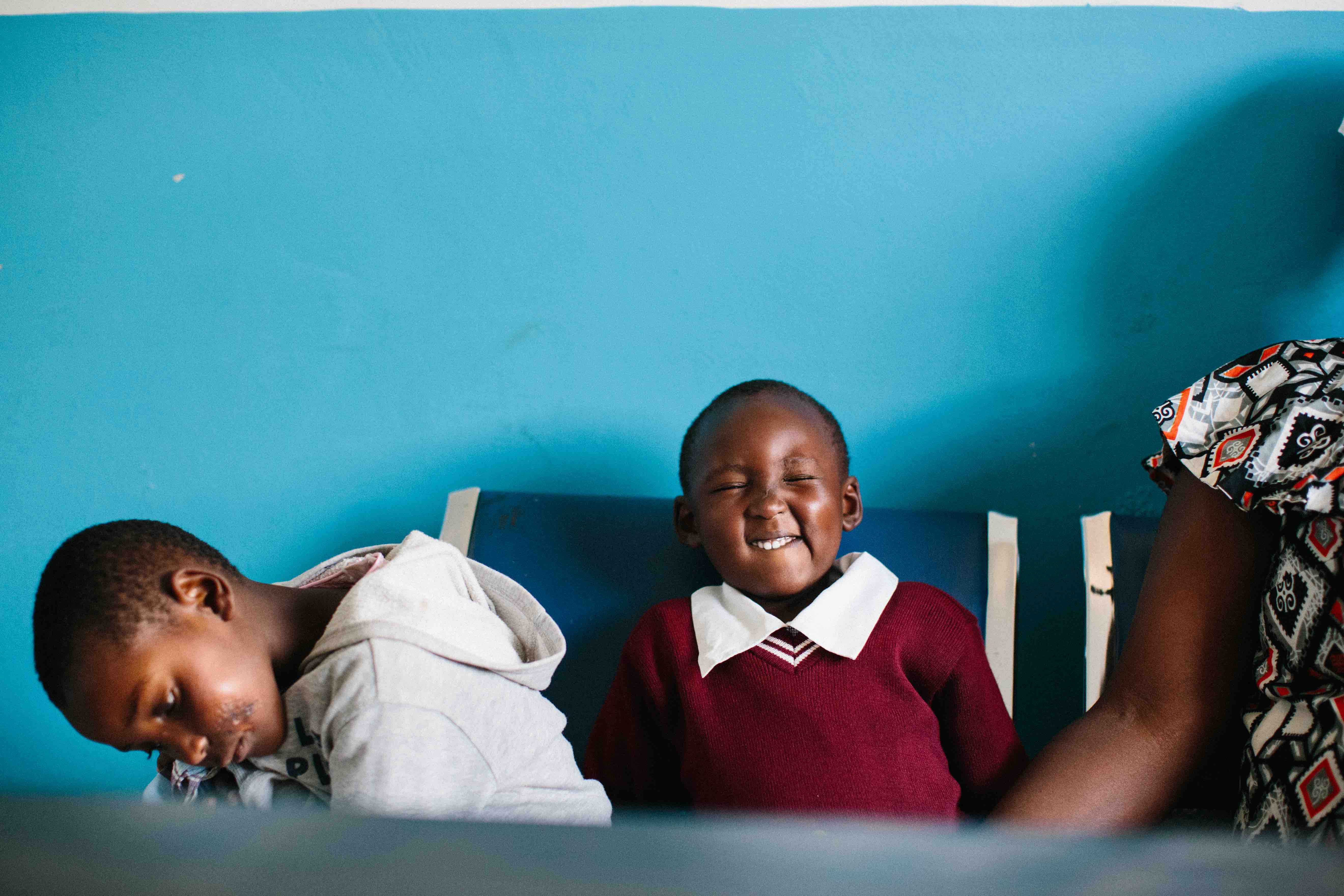
In places where dermatologists are scarce and laboratory services limited a skin health app developed by WHO is helping patients receive earlier diagnoses and reduce unnecessary referrals.
Salome, Esther and Grace
In a small room in a hospital near Nairobi, Kenya, Salome holds down her daughter Esther, 7, on a desk. The girl writhes and yells, “Why, why, why!” as the head nurse slowly and carefully gives her three injections around a large skin lesion on her cheek. Esther has cutaneous leishmaniasis (CL), a parasitic disease spread by sandflies. The only treatment is these painful injections every week for eight weeks. “This is why we need prevention,” Florence says when she’s done. The room falls silent for a few moments.
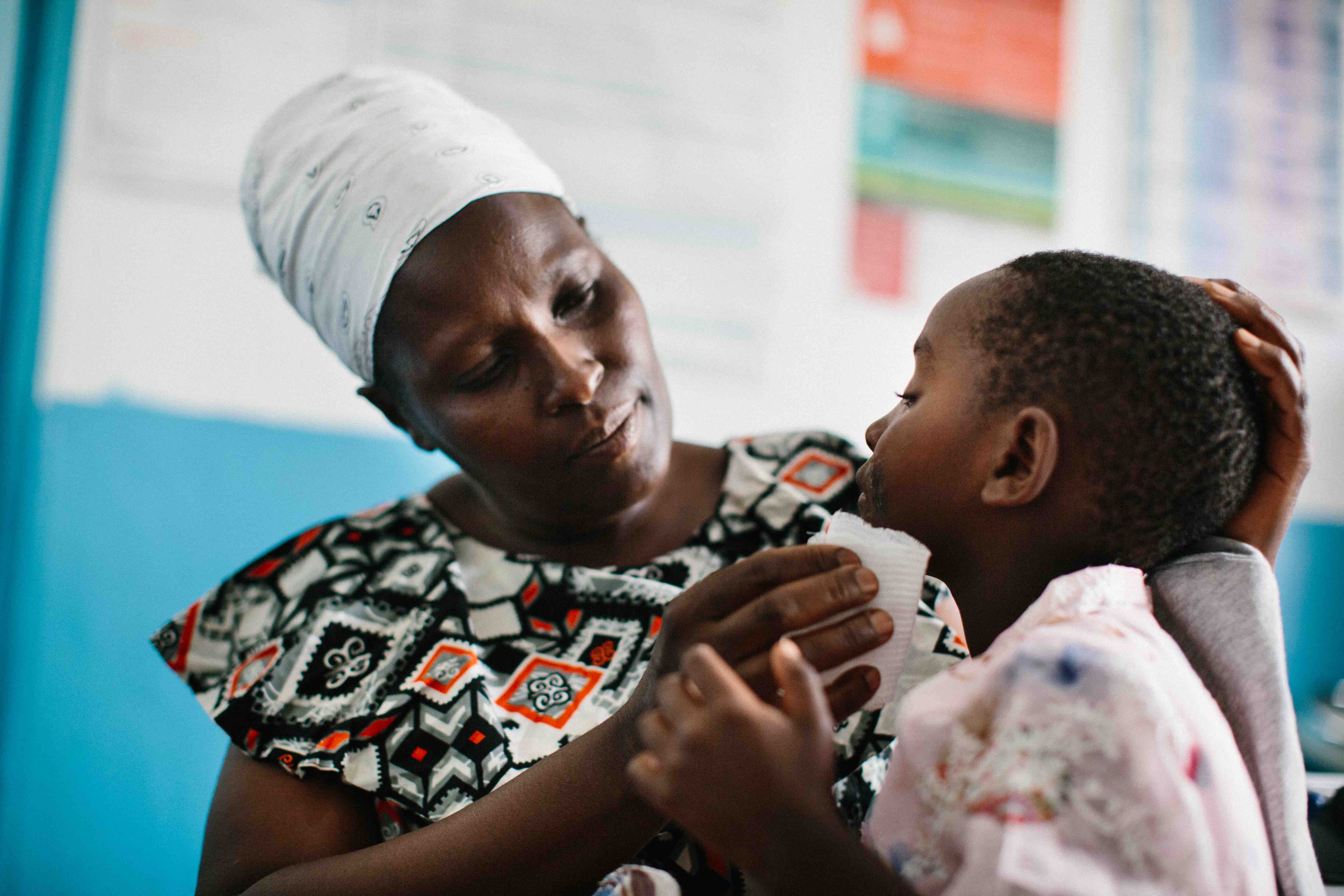
It has been three years since Salome first noticed the wound on Esther’s cheek. The treatment originally began in 2023, but it pained Salome so much to see her daughter go through the trauma of the injections that she abandoned the treatment in January 2025. “I saw the child was suffering,” she says. They took a 10-month pause in treatment. In that time, the lesion spread and scarred. When Esther’s sister, Grace, 4, developed a skin lesion on her neck in October 2025, Salome decided it was time to go back to the clinic. By that time the affected area on Esther’s cheek had grown so large that it now needs three injections at every visit to the facility.
Grace’s skin lesion looked different from Esther’s, so Salome, a volunteer community health worker, thought it might be a different condition. Unable to make a diagnosis by eye, the nurse used the WHO Skin NTDs app, which came back with several options for possible conditions. After a lab test confirmed CL, Grace’s treatment started. Now the family walks an hour each way to and from the clinic every week so the girls can get their injections.
Salome says skin conditions are rife in her community, with many people unable to reach a clinic or too scared to see a doctor. Many turn to traditional remedies that offer only temporary relief – Salome remembers at one point trying to help Esther using a paste made from a plant found on local farms, but it did little good.
She believes the app could help identify hidden cases in remote villages where many people never reach care, allowing them to start treatment sooner and avoid the trauma that Esther goes through every week. “Some children run away from the treatment. If Esther was older, she would have run away if I had sent her by herself,” Salome says. She says if she used the app in her work as a volunteer health worker, it would help her convince more people to seek help. “If you find a child like Esther in the community, you can assist their parents to bring that child to a facility like this.”
Susan
For weeks, Susan avoided mirrors because she couldn’t bear looking at the small acne-like lesions spreading across her cheeks and forehead. Living in a rural community and raising her 11-year-old son alone, the 33-year-old widow found herself withdrawing from others as questions about her appearance became constant. “People keep asking what is wrong, what did you do, what did you eat?” she says. “I don’t like those questions so I decided to stay at home.”
Susan had already travelled to several hospitals searching for answers. Finally, she boarded a bus for a three-hour journey to the hospital near Nairobi. As a farmer who keeps cattle, she worried about spending all day at the hospital. However, she was desperate for a diagnosis, a treatment, and a return to her normal life.
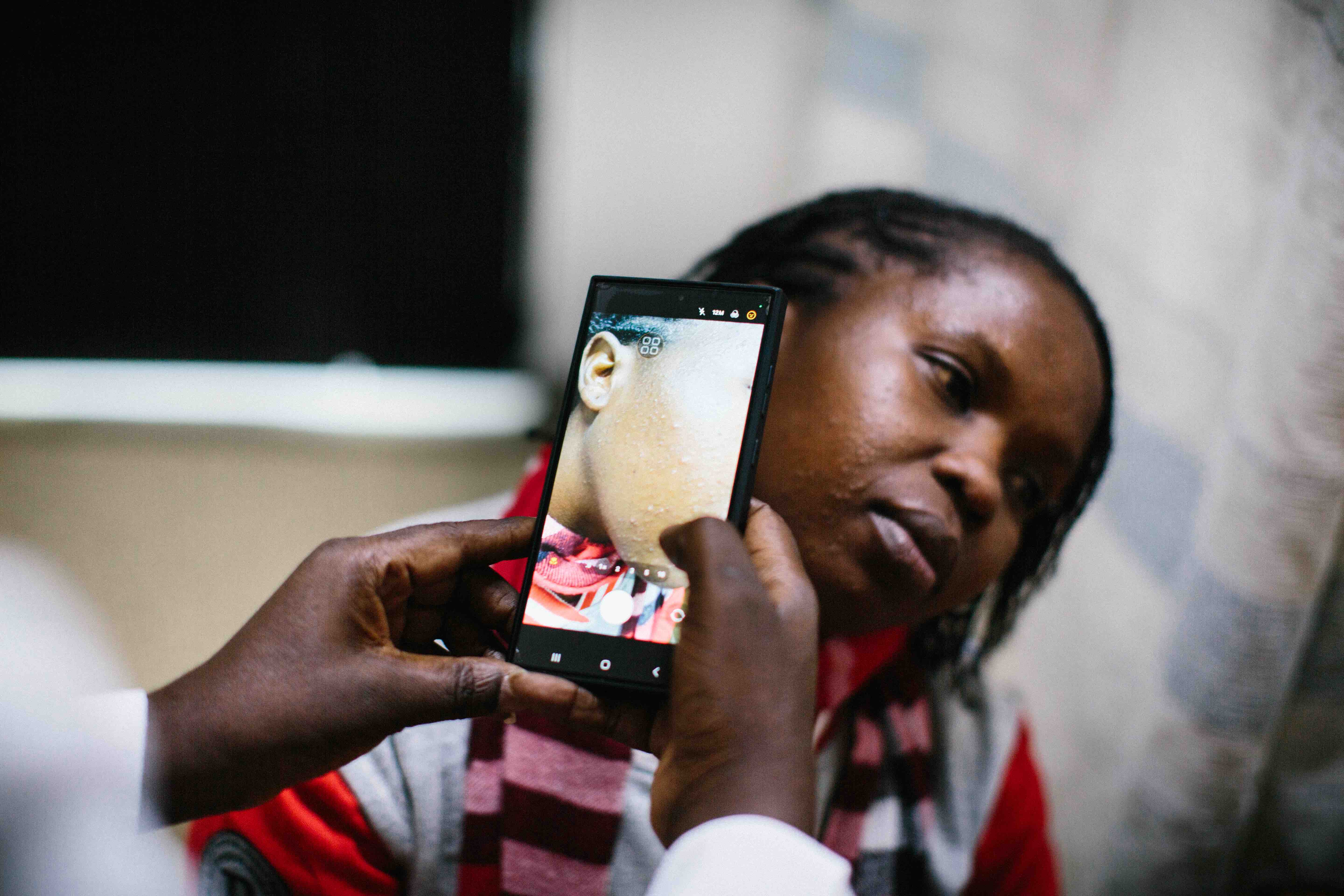
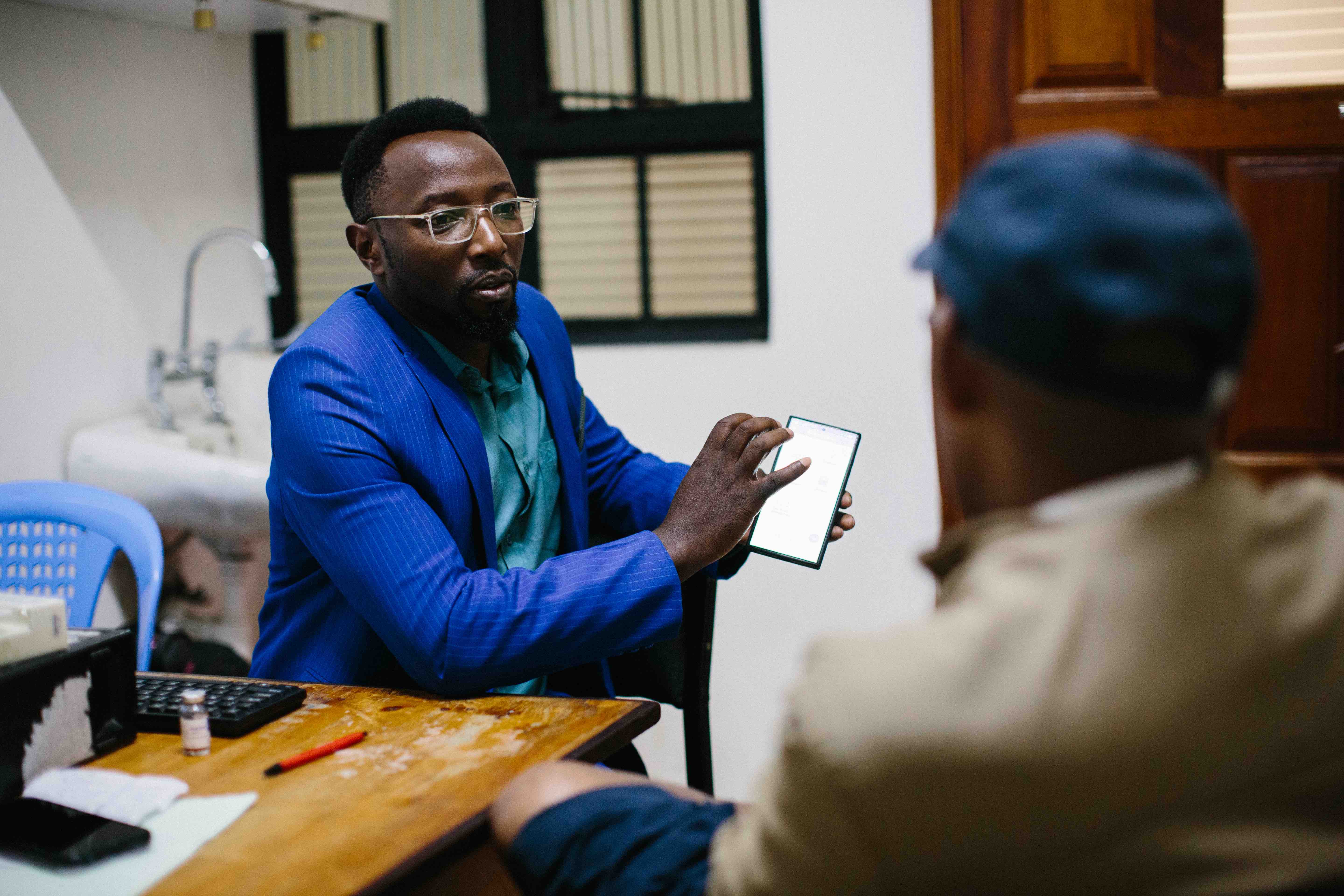
At Susan’s first visit, the doctor was uncertain about the cause of her condition and asked her to return the following morning so she could also be seen by Ben, a frontline health worker who had been trained to use the WHO Skin NTDs app. Within the hospital, Ben had become someone colleagues often turned to when supporting patients with skin conditions because of his experience using the app.
During this follow-up consultation, Ben used the WHO Skin NTDs app to take a photograph of Susan’s forehead. The app generated a possible diagnosis: acne and folliculitis, a common condition caused by inflamed hair follicles. Then, Susan herself asked him to also photograph her right cheek, where the spots are more pronounced. “I feel the problem is bigger on my cheek, so I wanted him to photograph that as well,” she says.
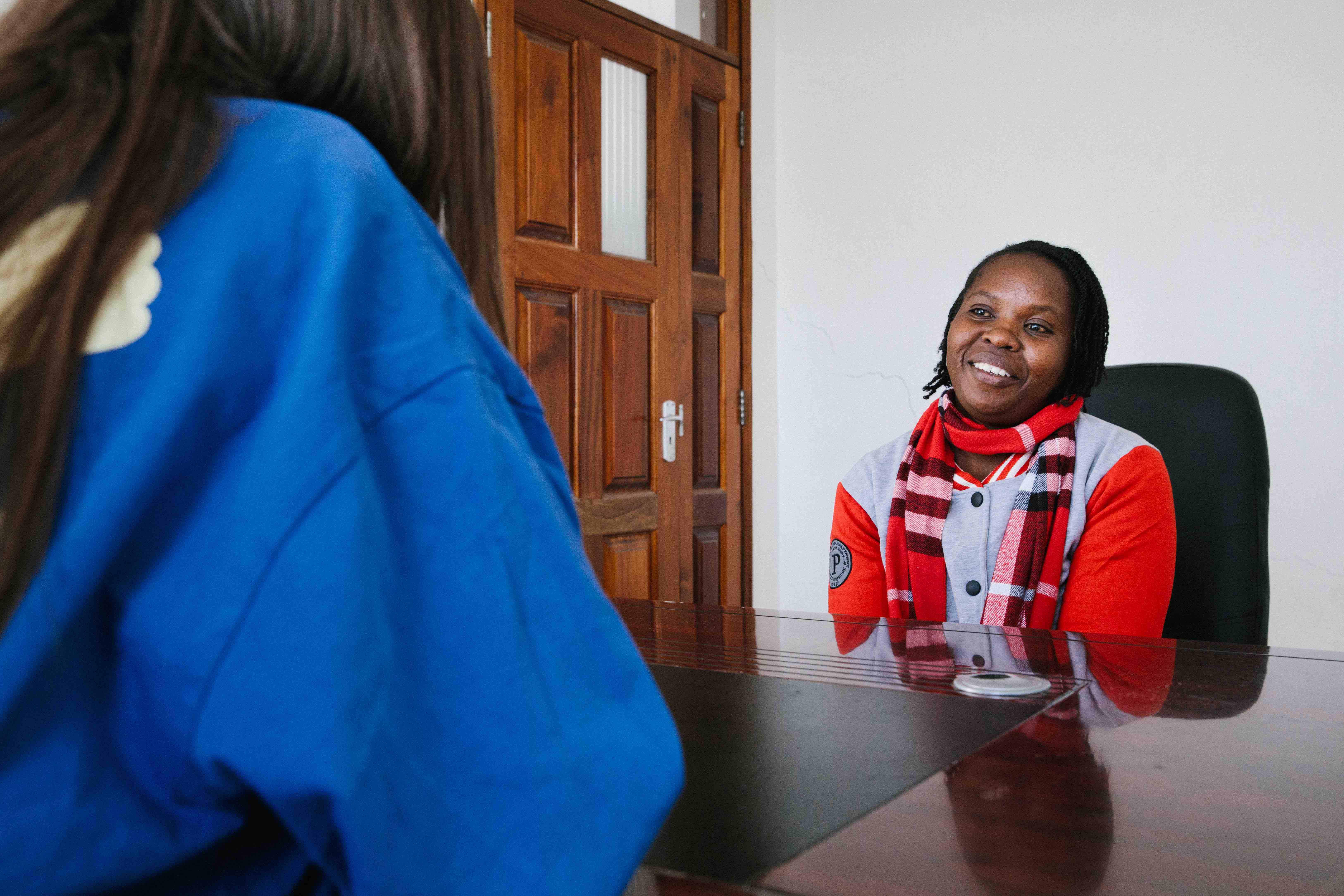
The app returned the same result for both images, and she was prescribed acne cream and oral antibiotics. For Susan, the value of the app is in its speed and accuracy. “It’s not like when you go to a doctor, he looks at you once, just guesses and gives you medicine without knowing what the problem actually is,” she says. “The app is good because the doctor will give you medicine based on its results.”
By 9:30 that morning, Susan is already heading home — back to her farm, her cows and, she hopes, back to being comfortable in her own skin.
.jpeg)