Geneva | May 19, 2026
The WHO Foundation warmly welcomes Norway's announcement of US $3 million in additional funding for the Acute Care Transformation through Basic Emergency Care initiative - a significant step toward equipping more frontline health workers with life-saving skills. State Secretary Usman Mustaq from the Norwegian Ministry of Health shared the news at yesterday’s official World Health Assembly side event on scaling Integrated Emergency, Critical and Operative Care.
The contribution - in addition to the Norwegian government’s ongoing contribution to WHO - will help to scale up its Basic Emergency Care programme in at least five countries across Africa. The Norwegian Agency for International Development (Norad) will administer the agreement with WHO.
"Health innovations, such as the Basic Emergency Care program, contribute to saving lives, improving quality, and strengthening health systems. At the same time innovation can reduce costs and provide more value for money,” says Norad’s director Gunn Jorid Roset.
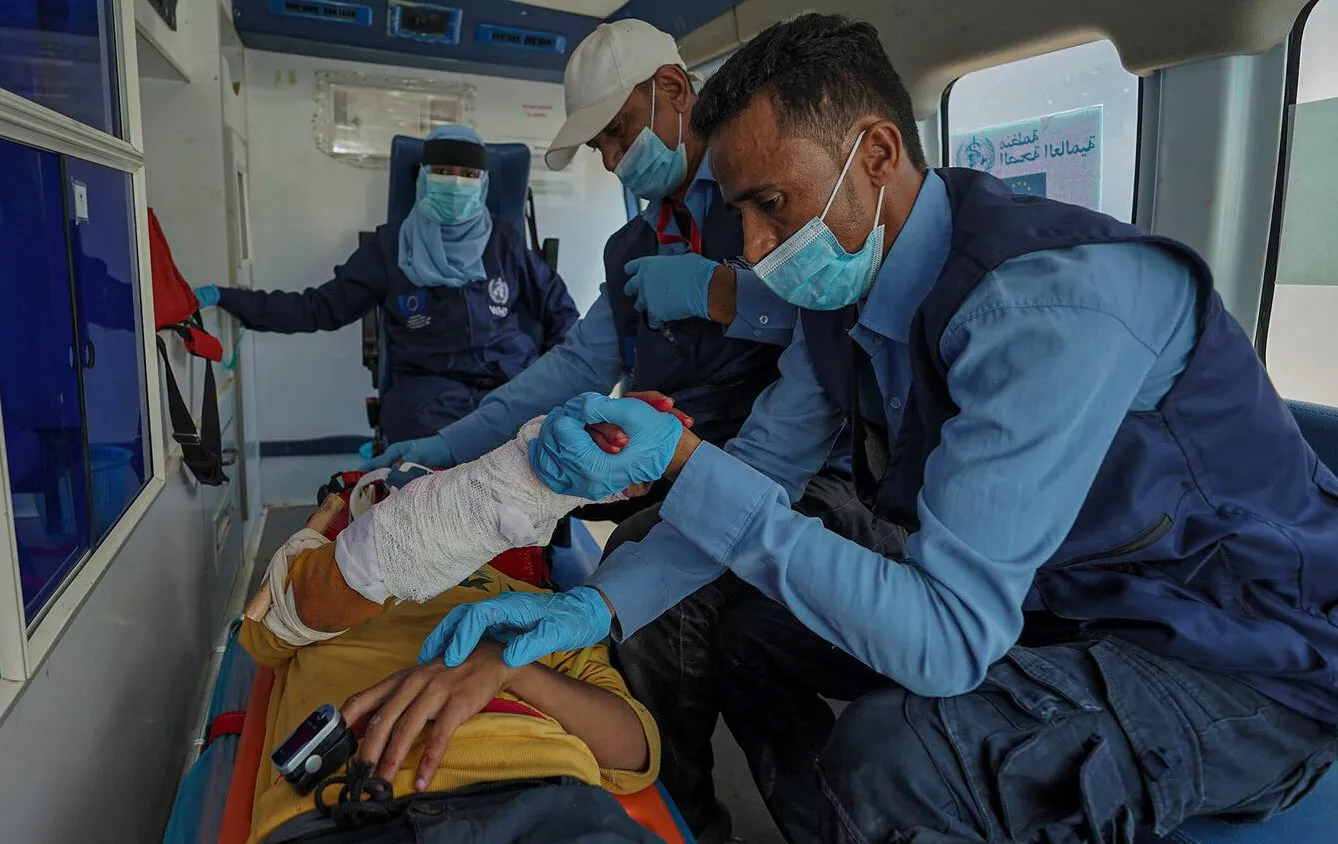
The WHO Basic Emergency Care program helps health professionals to save lives in time-critical emergencies such as injury, diabetic crisis, sepsis, and complications of child birth.
Its impact across 100 countries has been remarkable. A peer-reviewed study in district (first level) hospitals in Zambia showed deaths in hospitals fell by more than a third (35.7%) following the adoption of Basic Emergency Care training. A hybrid version of the course, combining in-person training with online modules and portable equipment for routine simulation, broadens the access to the program for healthcare professionals and creates the conditions for a sustainable scale up at the national level.
“The Basic Emergency Care program is an example of WHO achieving impact at scale,” said Anil Soni, CEO of the WHO Foundation, “The generous contribution from Norway will make a proven initiative accessible to more people and will save even more lives.”
Norway's contribution brings the ACTxBEC closer to its goal of US $25 million, which would expand the program to 1,000 health facilities across at least five African countries. The WHO Foundation established the Lifeline Fund - launched in 2025 with a US $12.5 million contribution from Laerdal Global Health - and is mobilizing additional philanthropic support toward this target.
“Every contribution towards the ACTxBEC is an investment in the future of healthcare in countries where resources are limited,“ said Tore Laerdal, Founder, Laerdal Global Health, “Our ambition is to contribute to a program that has demonstrable, life-saving impact. I invite others - whether private philanthropy or public organizations - to be part of its further success.”