At the WHO Foundation we raise funding to help WHO improve our health. As a global health authority WHO’s activities and technical guidelines, while powered by science, can appear to be remote from our experiences of healthcare. In fact the everyday reality of patients and health services forms a central plank of WHO’s guidance. As we celebrate science for World Health Day, we take a look at five WHO actions from the past year that reflect today’s realities and will influence the healthcare of tomorrow.
What we eat
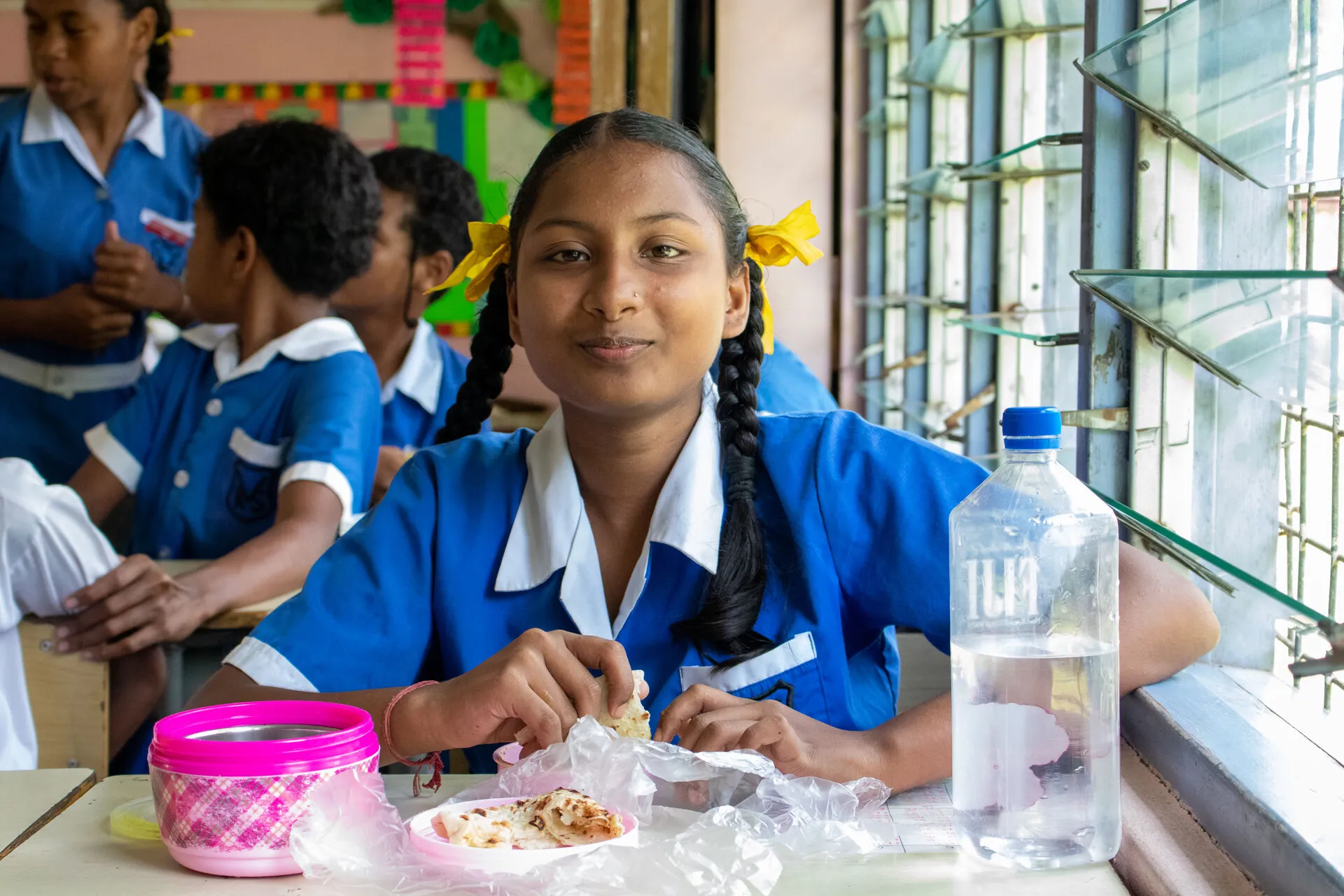
In a world where an estimated 390 million children are overweight or obese, obesity has overtaken malnutrition as the greatest nutrition-related threat to health. In January 2026 - based on population-level studies - WHO recommended an overhaul of the food children are offered in schools - putting healthy food and early years at the heart of obesity prevention. It will help countries put its guidance into practice and monitor whether changes are being made to help the 466 million children in the world who receive school meals.
“The food children eat at school, and the environments that shape what they eat, can have a profound impact on their learning, and lifelong consequences for their health and well-being.”
Dr Tedros Adhanom Ghebreyesus, WHO Director-General.
Making births safer
Childbirth is a dangerous time in a woman’s life. Severe bleeding after childbirth alone is thought to account for more than 45,000 deaths worldwide. In October 2025, WHO issued guidelines on post-childbirth bleeding (post-partum hemorrhage) based on the largest study to date. To diagnose post-partum hemorrhage, doctors and midwives are being advised to monitor women closely after birth and use calibrated drapes, simple plastic bags that can measure the amount of blood lost, so that they can act immediately when dangerous levels of blood loss are observed. Another recommendation is the use of transemic acid within three hours of birth to stop bleeding. Used correctly, transemic acid alone can save up to 10,000 women a year.
Treating meningitis faster
In the past year WHO issued its first ever guidelines on meningitis treatment and care based on extensive evidence. As the recent outbreak in the United Kingdom showed, bacterial meningitis can affect people anywhere in the world. It can become fatal within 24 hours, kills one in six affected, and an estimated two out of 10 people suffer long-term complications. WHO’s guidance stresses the need for rapid testing, hospital admission and treatment with anti-microbial medication.
An end to inhumane institutions
Treatment for mental health is changing for the better. But not everywhere and not always fast enough. Hundreds of thousands of people with mental health needs still live in institutions, when, with the right support, they could live in regular communities. Based on comprehensive reviews of evidence, WHO issued guidance to countries to close down inhumane institutions, integrate mental health care into community-based services, and support people with mental health conditions to prevent them feeling isolated and segregated. It also advises governments to take mental health into account across a whole range of services including education, the arts and the environment, rather than confining responsibility for safeguarding mental health to health ministries.
Medicines that matter most
Since 1977, WHO has updated its Model List of Essential Medicines every two years, guiding countries on which treatments deliver the greatest impact. WHO recommends that countries adopt and update national essential medicines lists based on safety, clinical trial evidence and value for money criteria.
In 2025, the list was expanded to reflect the reality of today’s health challenges: non-communicable diseases are now the world’s leading killers. New additions include advanced cancer therapies and GLP-1 treatments for diabetes and obesity.