What is the Obesity Epidemic?
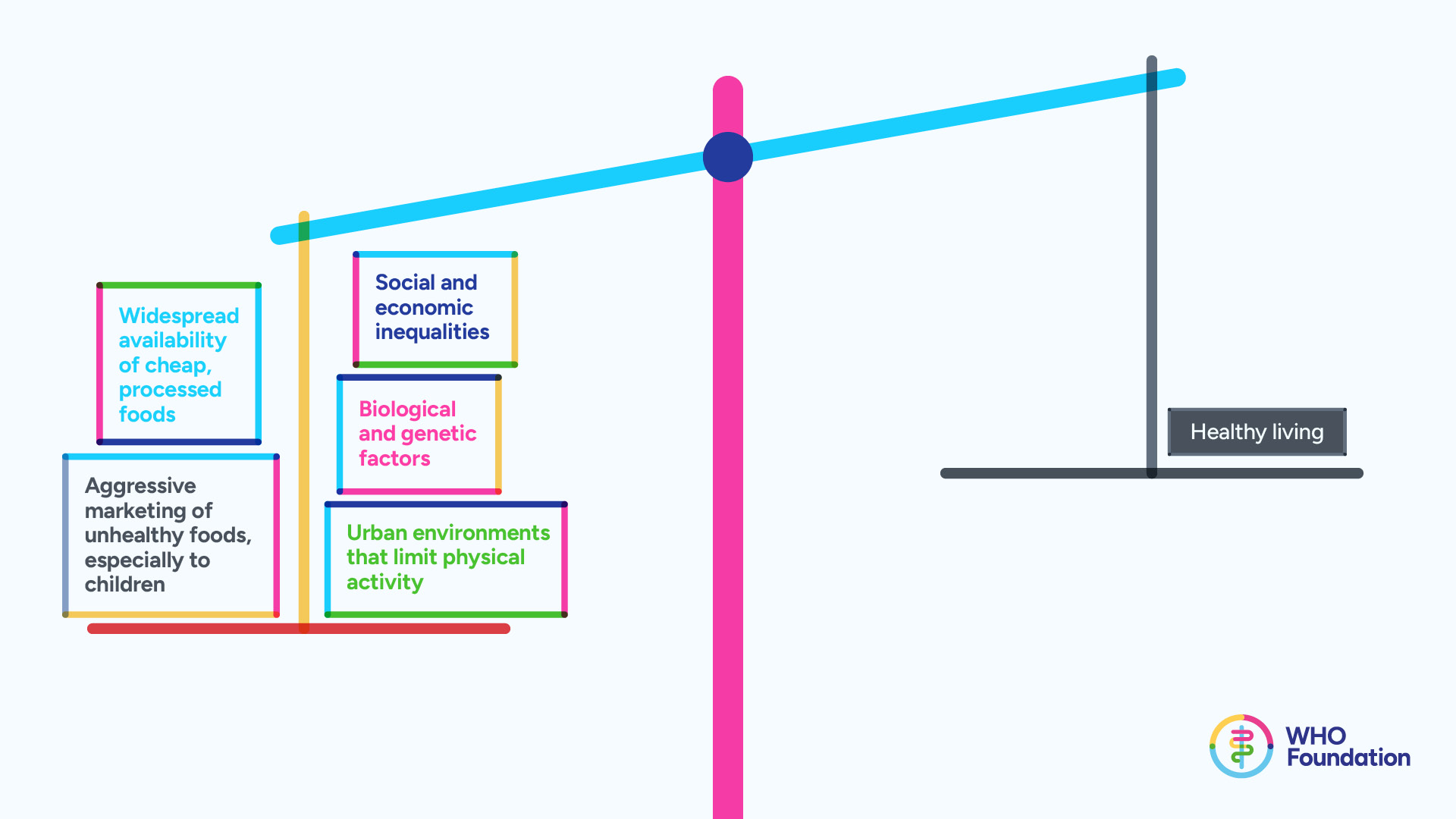
Obesity is one of the most serious public health challenges of our time. Defined as having a body mass index (BMI) of 30 or above, the condition affects people of all ages and backgrounds across the world. Today, more than one billion people worldwide are living with obesity, a number that's expected to double by 2030. Obesity is not a result of lifestyle choices, but a complex, chronic disease that significantly raises the risk of heart disease, diabetes, and certain cancers. It is shaped by:
- Widespread availability of cheap, processed foods
- Urban environments that limit physical activity
- Aggressive marketing of unhealthy foods, especially to children
- Social and economic inequalities
- Biological and genetic factors
People often make choices in environments that push them toward unhealthy options, highlighting the need for systemic solutions.
How Widespread is the Challenge?
In 2025, about 1 in 10 school-aged children and adolescents – 188 million – were living with obesity worldwide. Today the number of children with obesity has surpassed the number of children who are underweight. It is estimated that by 2030 over one billion adults globally will be obese, with low-and middle-income countries having the fastest-rising obesity rates. In Thailand, for example, within 20 years the rate of obesity in school children has risen from 5.8% to 15%. Non-communicable diseases such as NCDs such as type 2 diabetes, coronary heart disease, and high blood pressure (hypertension )account for 74% of all deaths in the country.
.jpg)
What is WHO Doing to Tackle It?
The WHO Acceleration Plan to Stop Obesity coordinates action across sectors like health, education, agriculture, and urban planning, using policies that are tested and proven to make a difference. It supports 34 countries, representing 1.3 billion people, to reduce obesity prevalence across all age groups by 5% by 2030.
Obesity is a complex disease that requires comprehensive, lifelong care. And it has many social, commercial and environmental determinants, requiring action in many sectors – not only in the clinic.
Dr Tedros Adhanom Ghebreyesus, WHO Director General, December 1 2025
How does the WHO Foundation Support WHO?
The WHO Foundation raises awareness and mobilizes funding for the WHO Acceleration Plan to Stop Obesity, supporting:
- Health worker training
- School-based prevention programs
- Research on health-system readiness
Our Donors
We are grateful to Eli Lilly and Company and Novo Nordisk for funding the WHO Foundation’s program of support for obesity and cardio-renal-metabolic diseases.


.jpeg)