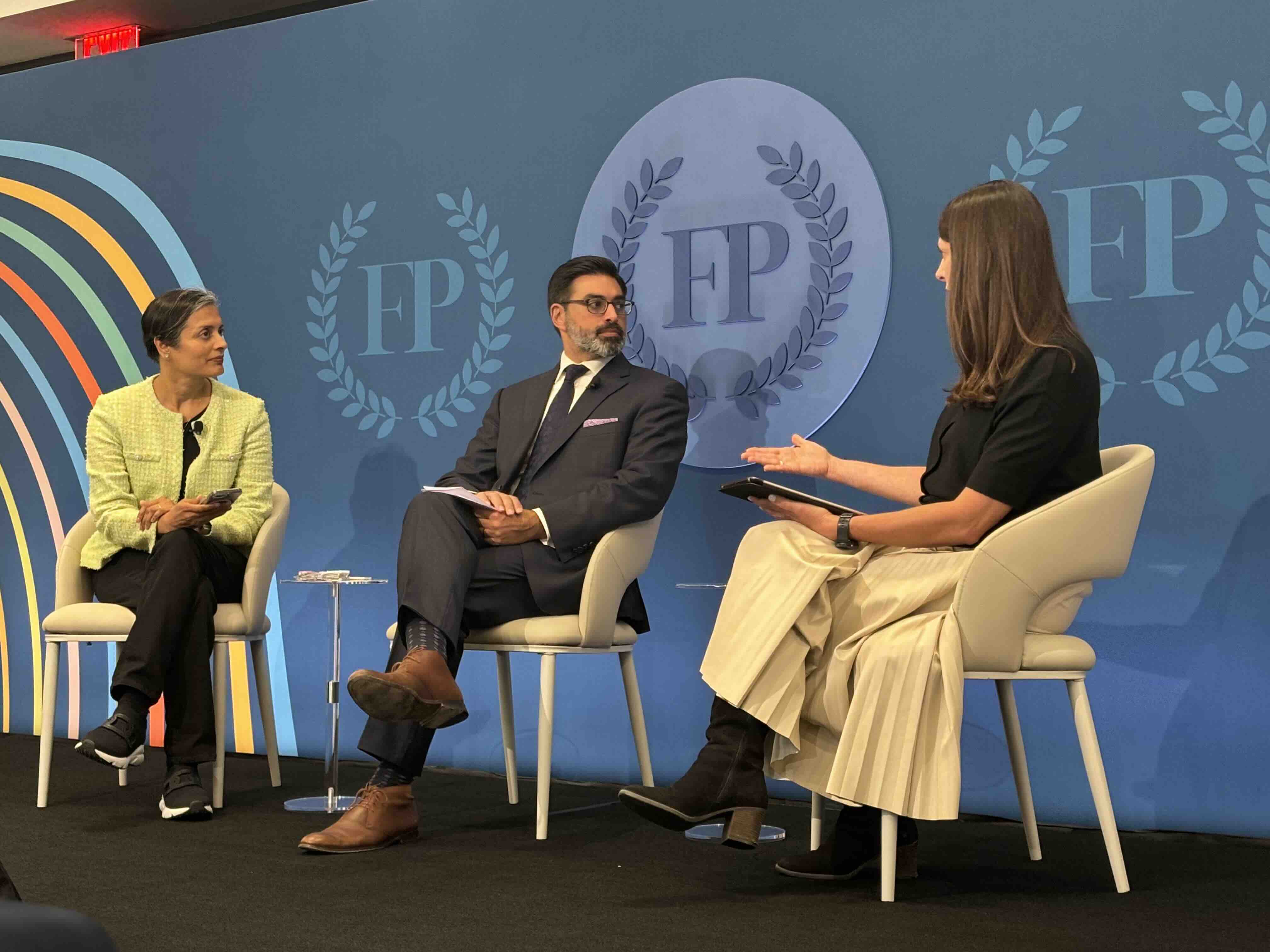
This week, on World Health Day, Valerie Boulet, Chief Development Officer at the WHO Foundation, attended the One Health Summit in Lyon. Hosted by the French Government, the summit brought together governments, scientists, private sector leaders and global health advocates to advance a One Health approach—recognising that human, animal and environmental health are deeply interconnected. It underscored the urgency of turning this concept into coordinated, operational action across sectors.
Being in Lyon this week, I was reminded of stories shared from a WHO-supported skin health clinic in Kenya, as part of its work on neglected tropical diseases. One patient in particular stayed with me: a young girl sitting with her mother and sister, a painful lesion stretching across her cheek toward her eye. She is visibly distressed.
She is suffering from cutaneous leishmaniasis. To treat it, a nurse administers repeated injections of sodium stibogluconate around the lesion. At the time the photograph was taken, the child was in week seven of treatment—a long, painful process for both patients and their families. Yet without diagnosis and care, the consequences can be far worse, including permanent disfigurement. Preventative tools such as insecticide-treated bed nets could significantly reduce transmission, but they remain out of reach for many.
This is not a disease that can be contained within the walls of a clinic. In parts of Kenya, cutaneous leishmaniasis is transmitted by infected sandflies whose habitats and behavior are shaped by environmental change and proximity to animal hosts. As climate change and urban expansion push communities into previously forested areas, sandfly populations are spreading, bringing the disease into new regions. What appears to be a localized infection is, in reality, part of a much broader and shifting system.
Treating patients without addressing animal reservoirs, vector habitats, and the ecological pressures driving transmission only tackles one part of that system. This is why a One Health approach is not optional—it is essential. Around three quarters of emerging infectious diseases originate in animals, and more recent outbreaks like mpox have shown how quickly pathogens can move across species and borders when these connections are overlooked. Cutaneous leishmaniasis is no different: controlling it requires action across the full ecosystem in which it thrives.
This multi-sectoral approach is increasingly recognised, but public funding alone cannot meet the scale of need—particularly for diseases like cutaneous leishmaniasis that primarily affect low- and middle-income countries and receive limited attention. In the Kenyan clinic, the nurse had only recently been trained to administer treatment. She relies on a WHO-supported mobile phone app to help diagnose skin diseases, and still has to travel by public transport to deliver samples to a laboratory for confirmation. Funding gaps persist at every stage, from diagnosis to prevention.
At the WHO Foundation, with support from L’Oréal Dermatological Beauty’s Act for Dermatology program, we are working with WHO to increase access to skin health, strengthening among other aspects diagnosis and treatment for neglected tropical skin diseases. This includes funding research into tools like the skin health app used in Kenya—small but important steps toward more accessible care.
Encouragingly, at this week’s summit in Lyon, I saw a renewed and tangible commitment from philanthropic leaders to confront diseases such as leishmaniasis through a One Health approach. At the summit they developed a new declaration which sets out three main philanthropic priorities: sustaining investment in product development, applying One Health more systematically—particularly in the context of climate change—and strengthening the catalytic role of philanthropy in driving collaboration. The message is clear: no single actor can respond to these challenges alone. Meaningful progress will depend on deeper, more intentional partnerships across governments, industry, civil society, and the scientific community.
Elevating the One Health approach—and ensuring the private sector is part of the solution—is essential. But the real test will be whether we can turn shared intent into sustained, coordinated action, and deliver meaningful change for those who remain furthest from care.