A simple sight-testing app is bringing vital care to places where clinician shortages and misconceptions about eye health stand in the way of diagnosis and treatment.
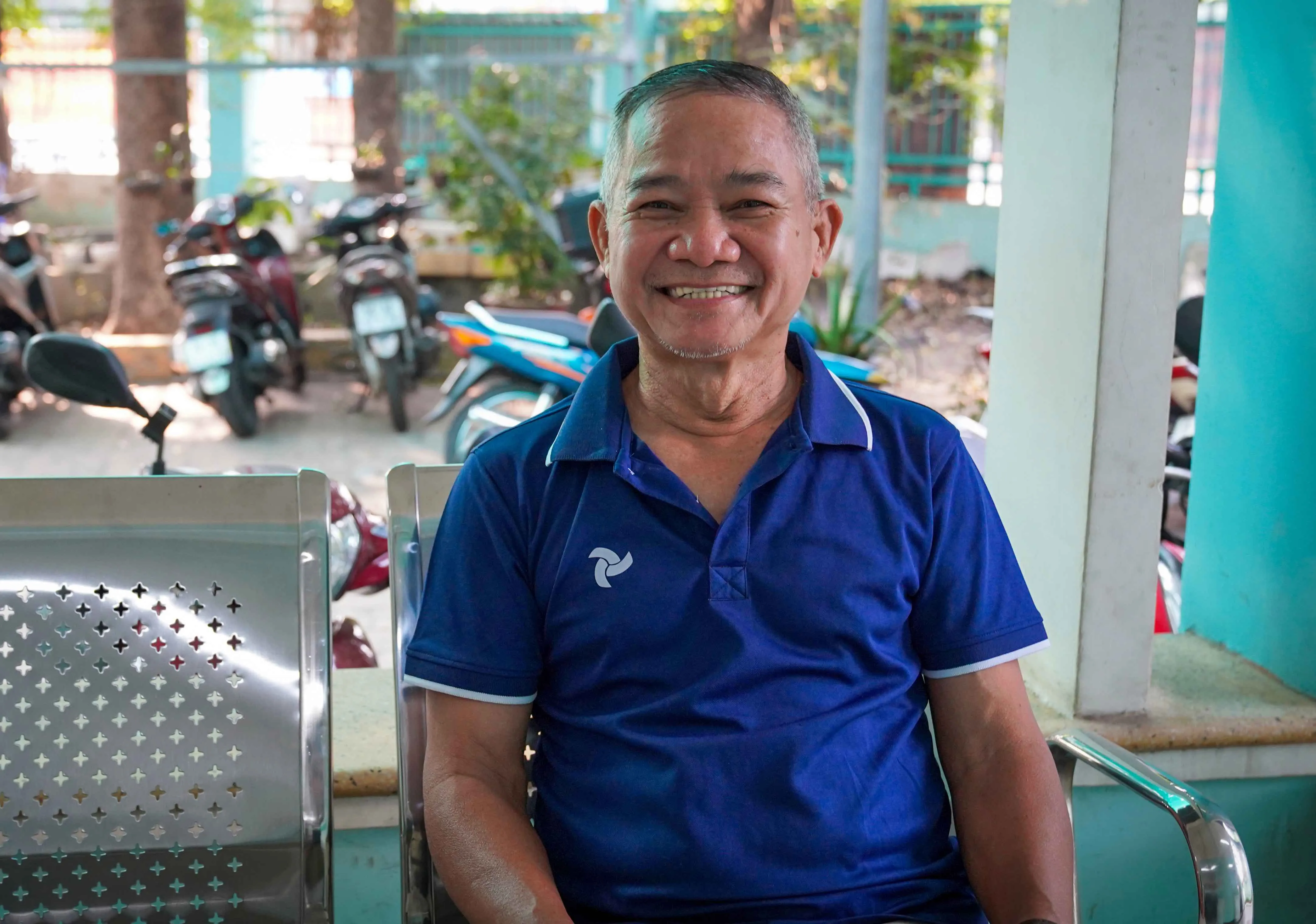
By the time Jonas Syabughangise walked into a free eye health screening at the school where he taught in Kasese, Western Uganda, he had given up hope that anyone could help him.He had already seen three different doctors about his deteriorating eyesight, which had turned even the simplest task into a challenge. “I was really struggling,” Syabughangise said. “Whenever I wrote on the chalkboard, if I went even halfway down the small classroom, I could not read what I wrote.”
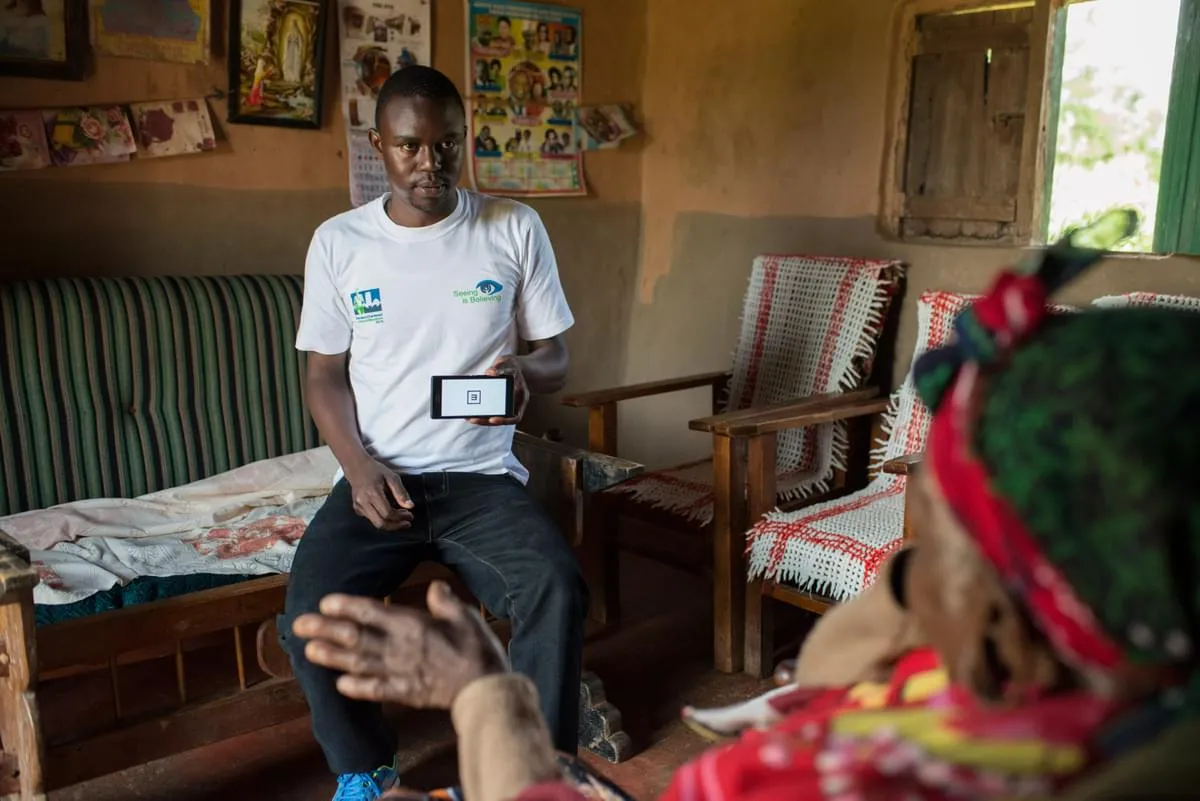
When he sat down for the test, Syabughangise was not presented with the letter chart commonly used in eyesight screenings. Instead, the tester from Dr Arunga’s Eye Hospital in Mbarara City used an app developed by Peek Vision, an international social enterprise using technology and data to improve eye care for people with limited access to health services. The tester held up a smartphone and asked Syabughangise to identify the direction of a capital letter “E” on the screen. “I had my doubts that this test would be any different,” Syabughangise said. “Little did I know it was going to help me.”
Globally, at least 1 billion people live with some form of vision impairment that could have been prevented or corrected with early diagnosis, according to WHO. But even if they manage to get diagnosed, many people have no access to treatment. One of the most common causes of vision impairment is cataract, the clouding of the eye lens, which affects 94 million people globally. A new study published in The Lancet Global Health reveals that nearly half of those people cannot get the simple surgery that could save their eyesight. The burden falls heaviest on low- and middle-income countries, where financial constraints, geographic barriers, a shortage of specialist care, and lack of awareness stop many people getting the care they need.
Dismantle barriers
Peek Vision wants to see those barriers dismantled, and the first step is making eye testing simple and accessible. Unlike a standard eye test chart, the Peek app does not require the patient to be able to read – they can simply point to indicate which direction the letter on the screen is facing. The tester swipes the screen in that direction and with each swipe, the letter gets gradually smaller. The app records whether each answer was right or wrong, and the test ends when the patient says they can no longer see where the letter is pointed. Designed to be easy to use even for someone with no clinical knowledge, the app guides users step by step and feeds data straight into referral and follow-up systems. Beyond testing, programs using Peek also train community screeners to explain care pathways, support attendance at clinics and help families understand treatment options.
Syabughangise’s screening flagged severe myopia. He received a temporary pair of glasses the same day and was referred to the hospital for a stronger prescription. “It is like night and day,” he said. “I can now write something on the board and read it from the other end of the classroom. I can watch football on TV without sitting right up to the screen. I am seeing hope.”
Bridging the eye care gap
British eye doctor Andrew Bastawrous had the idea for Peek Vision in 2012 while running a clinic in Kenya, where he saw that access to care – not only the quality of treatment – was a major obstacle to restoring sight. Although the most common eye conditions can be treated fairly simply with glasses or surgery, many parts of the world lack enough well-trained eye health professionals and they tend to be concentrated in urban areas. Inconsistent or insufficient testing programs means that even people who can access treatment often do not know that their failing eyesight can be fixed. “Some people would come to my clinic in Kenya and they had been blind for 10 or 15 years – and that whole time they were five minutes away from having their sight back,” Bastawrous said. Since the first programs adopted its technology in 2018, Peek Vision has screened more than 17 million people in Africa and Asia and connected more than 1.7 million to care, he added. He credits that impact to tailoring programs for each community. The organization partners with governments, NGOs and health workers who organize screenings in local clinics, churches, mosques and schools or send testers door to door. “Designing the programs that way was a prerequisite to us growing, because we realized we would scale at the pace of trust, not the pace of technology,” Bastawrous said.
Using data to drive efficiency
At Dr Arunga’s Eye Hospital, director Dr Viola Ninsiima Arunga says the Peek platform has transformed outreach by making data reliable and immediate. After screenings, clinicians can see who was tested, where, and how many patients were referred, allowing them to plan follow-up testing or treatment more effectively, Arunga said.
“Instead of waiting one or two weeks for someone to analyse the data, I’ll check the data in the evening and I can immediately tell that out of the 100 people the screeners saw that day, they referred 40,” she said. “I know all of their diagnoses, their ages, whether they are women, men, or children, and I can plan the next day accordingly."
Using historical data from previous screenings in a particular area, Arunga’s team can also better prepare for future outreach, ensuring they have the right resources and enough workers on hand.
She recalled screening days held before they started using the app when they would plan for 200 people to attend and 500 would show up.
“We would run out of supplies, the health workers would get exhausted and the patients would become frustrated,” she said. “Now, those types of problems are a thing of the past.”
Saving sight, restoring livelihoods
One barrier technology cannot completely remove is cost. Treatment is rarely free in Uganda, including in public health facilities. For patients with progressive conditions such as cataract, an inability to pay even subsidized fees leaves them vulnerable to increasingly impaired vision and, eventually, blindness.
“People will save for 12 or 18 months to be able to afford surgery, meanwhile their vision is worsening,” said Bastawrous. “And then they might have a life event that uses up all the money they saved and they never get the surgery.”
To address this issue, Peek Vision is partnering with Dr Arunga’s Eye Hospital and Opportunity Bank Uganda on what Bastawrous calls the “See Now, Pay Later” program, providing patients with microloans to cover the cost of cataract surgery that they later repay in manageable monthly instalments.
The benefits reach beyond the individual patient. After surgery, people regain independence and can start making an income again, easing the financial strain on their families. Relatives who stayed home to help with everyday tasks such as getting around, cooking, and personal care can return to school or work.
Currently being piloted in Uganda, “See Now, Pay Later” is still at an early stage. But Bastawrous said that, if the pilot is successful, it could save livelihoods, transforming the financial situation of families around the country. He noted that studies show the income of a household one year after cataract surgery goes up by as much as the cost of the surgery. “You are actually unlocking new income by doing the treatment,” he said.
Crucially, any margins from the loan repayments are reinvested into outreach, screening and follow-up care, helping to sustainably expand access to cataract surgery and making it profitable to treat the poorest in the community, Bastawrous said. “The idea is that hospitals will increase demand and more people will want to be ophthalmologists, because you get to do impactful work and make money – it starts to change the dynamics of the entire system. Growth is intentionally paced to align technology, financing and community trust,” he said.
Fighting fear and misconceptions
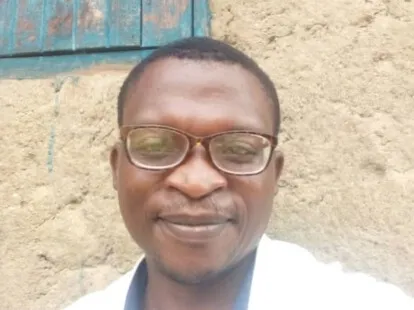
For Syabughangise, an unexpected benefit of his new glasses is how they allow him to challenge common misconceptions around eye health. Before his sight test, friends and family warned him that wearing glasses would make him go blind. “Now, I am an advocate – I explain that now I can see better than ever,” he said. “I know that, with time, they will start getting their eyes tested, too. ”As he waits for his new prescription, Syabughangise is most excited about finally being able to take lessons to drive a car. He is already back on a motorcycle after being forced to sell it when his worsening eyesight made it too dangerous for him to ride.
“As soon as I got my new glasses, I borrowed a friend’s motorcycle and rode into town and back – my friend was so surprised that I made it back,” he laughed. “My only worry was that the glasses would fall off, but they didn’t.”