Vanessa Rousselle, Head of Strategic Engagement at the WHO Foundation explains why self-care in health is increasingly seen as a way to make health systems more effective.
Health systems worldwide are under mounting pressure, from workforce shortages and rising chronic disease to repeated shocks and crises. At the same time, billions of people still lack access to essential health services. Self-care is one of the most practical, scalable solutions to close this gap. From a global health perspective, self-care is not about shifting responsibility onto individuals. It is a smart health systems investment, one that expands access, improves efficiency, and delivers measurable impact, particularly for the most underserved populations.
What is self care?
The World Health Organization defines self-care as “the ability of individuals, families and communities to promote health, prevent disease, maintain health, and cope with illness and disability, with or without the support of a health worker.”
This definition makes two things clear. First, self-care spans the full continuum of health, from prevention to treatment and long-term management. Second, self-care does not replace health services delivered by healthcare staff. Rather, it complements them, extending their reach and enabling people to engage more actively in their own health.
This means investing in solutions that span prevention, diagnosis, treatment, and long-term management, while strengthening, not replacing, formal health services. At a time when health systems around the world are under increasing strain, self-care is no longer optional. It is an essential part of how we deliver people-centered, equitable and resilient health services.
What does self care look like in practice?
Self-care is sometimes misunderstood as informal or unregulated care. In fact, WHO’s work on self-care focuses on interventions that are evidence-based, quality-assured, and safely integrated into health systems. They deliver strong returns on investment by reaching more people at lower cost and freeing up scarce health workforce capacity, when well organized.
Self-testing illustrates this impact. During the COVID-19 pandemic, self-testing enabled millions of people to assess their health status quickly, privately, and safely. This helped them take timely action, such as isolating, seeking care, or protecting others, while reducing pressure on overstretched health facilities. Similarly, HIV self-testing can increase access to diagnosis for populations who may face stigma, discrimination, or logistical barriers at facility-based testing. When supported by clear guidance, referral pathways, and regulatory oversight, self-testing can dramatically increase uptake and early detection.
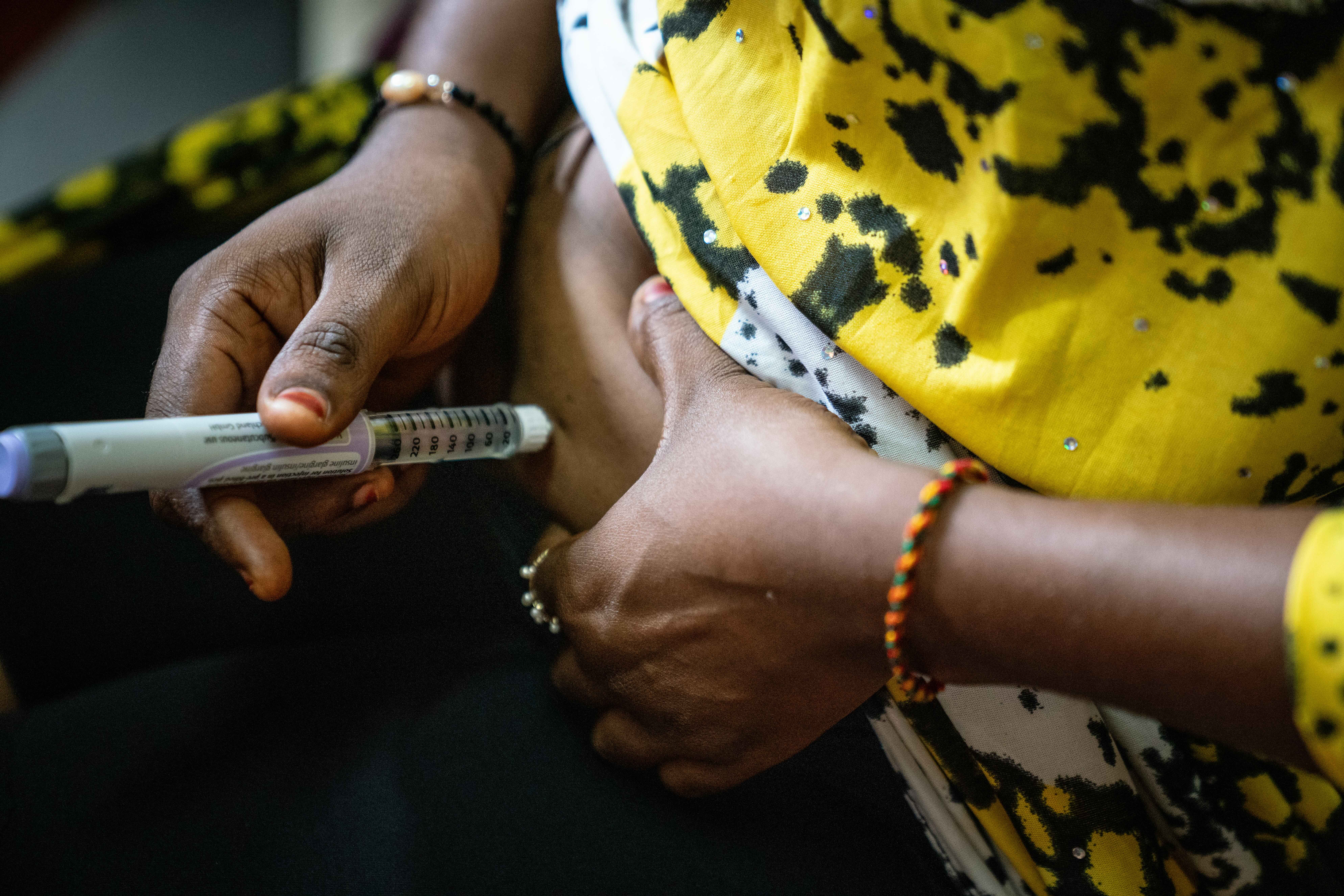
Self-care also plays a critical role in the management of noncommunicable diseases (NCDs), which account for the majority of deaths globally. For people living with conditions such as diabetes or hypertension, self-care includes activities like monitoring blood glucose or blood pressure, adhering to treatment, and making informed lifestyle choices. These actions, supported by health workers and health systems, can help people manage chronic conditions more effectively, reduce complications and avoid hospital visits.
These interventions represent scalable, cost-effective pathways to impact, aligned with efficiency, sustainability, and measurable outcomes.
Why self care matters for the most vulnerable
Self care matters because access to health services is still deeply unequal, with around half the world’s population still unable to access essential healthcare (as of the latest assessment (released late 2025), an estimated 4.6 billion people are not fully covered by essential health services). It is increasingly recognized as an important accelerator of universal health coverage (UHC), ensuring that everyone can access the health services they need, without financial hardship. Millions of people, particularly women and girls, adolescents, migrants, people living in humanitarian settings, and those in rural or underserved areas, face barriers to care. These barriers can be financial, geographic, social, or cultural.
When implemented responsibly, self-care can help overcome some of these obstacles. It can bring services closer to where people live and work. It can offer privacy and autonomy. It can reduce the time and cost associated with seeking care. For many, self-care interventions are not a convenience, they are the only realistic entry point into the health system.
Evidence shows that self-care interventions can improve health outcomes when they are designed around users’ needs and supported by appropriate policies and systems, as outlined in WHO's guidelines on self-care interventions for health and well-being.
At the same time, self-care can reduce pressure on health systems. By shifting certain tasks, such as routine monitoring or initial screening, away from facilities, health workers can focus on more complex cases and populations with higher needs. This is particularly important in contexts facing health workforce shortages or repeated crises.
Protecting patients, regulating practice
While self care offers enormous potential, it is not inherently equitable or safe. Without proper regulation, guidance, and integration, self-care interventions can exacerbate inequalities or expose people to poor-quality products and misinformation. WHO emphasizes that self-care interventions are most effective when embedded within primary health care, which is the foundation of universal health coverage. By extending care beyond health facilities and into communities, self-care helps primary healthcare systems reach more people, more equitably. This is where WHO’s leadership can play a critical role: supporting countries to embed self-care within primary health care and universal health coverage strategies, working with them to adapt policies, regulatory frameworks, develop guidance, to ensure self-care practices are helping people, not harming them, that they are realistic, affordable and practical. It is a health systems challenge that WHO is uniquely positioned to address.
How the WHO Foundation supports self-care
The WHO Foundation mobilizes resources to support WHO’s work in this area. By raising philanthropic and private sector funding, the Foundation helps WHO equip countries to make self-care a fully integrated part of their health systems in ways that respond to local needs, ensuring that interventions are accessible, effective, and grounded in human rights. At its core, self-care is about health equity. When supported by strong systems and sound policy, it expands access to care, empowers communities, and helps ensure that no one is left behind.
We have established the Universal Health Coverage Self Care Accelerator to encourage companies, philanthropies and individual donors to pool funding that will support WHO’s work in self-care. We are grateful to Bayer for providing foundational and catalytic investment for this initiative.
Together, we can help ensure that self-care is not a privilege for a few, but a pathway to better health for all.
For more information about WHO Foundation’s support for self care or to learn more about the Universal Health Coverage Self Care Accelerator contact Vanessa Rousselle, Head of Strategic Engagement.
.jpeg)